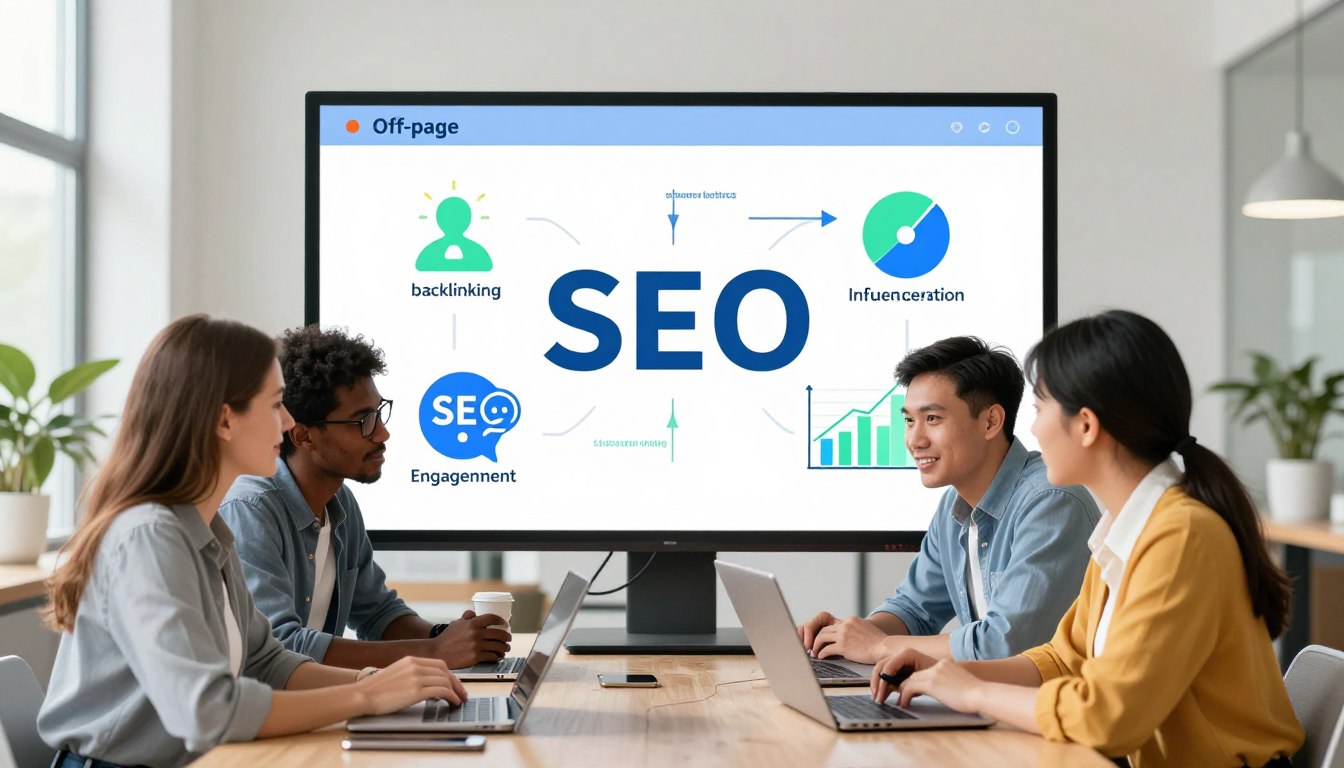
Are you wondering why your website isn’t ranking higher in search engine results despite your best on-site optimization efforts? The answer lies in off-page optimization, a crucial aspect of SEO that can significantly boost your website’s visibility and credibility.
Off-page SEO involves strategies that help search engines understand your website’s relevance and authority. It’s about building your website’s reputation online through quality backlinks, social signals, and more. As a beginner, understanding and implementing these strategies can seem daunting, but with a step-by-step approach, you can improve your website’s rankings and drive more traffic to your site.
Key Takeaways
- Off-page SEO is crucial for improving website visibility and rankings.
- Quality backlinks are a key factor in off-page SEO.
- Social signals can impact your website’s credibility.
- A step-by-step guide can help beginners implement off-page SEO strategies.
- Off-page SEO involves building your website’s online reputation.
Understanding Off Page SEO Fundamentals
While on-page SEO focuses on optimizing your website’s content, off-page SEO is about building your site’s reputation across the web. Understanding the basics of off-page SEO is crucial for any beginner looking to improve their website’s search engine ranking.
What Is Off Page SEO and Why It Matters
Off-page SEO refers to the techniques used to improve your website’s visibility and credibility by acquiring high-quality backlinks from other reputable sites, enhancing your online presence through social media, and more. It matters because it signals to search engines that your content is valuable and worthy of citation.
The Difference Between On-Page and Off-Page SEO
On-page SEO involves optimizing elements on your website, such as content, meta tags, and internal linking. In contrast, off-page SEO focuses on external factors like backlinks, social media presence, and local SEO. Both are essential for a comprehensive SEO strategy.
Quality vs. Quantity: The Truth About Backlinks
Not all backlinks are created equal. Quality trumps quantity when it comes to backlinks. A few links from authoritative sites are more valuable than numerous links from low-quality sites.
Domain Authority and Link Relevance
Domain authority is a metric that predicts how well a website will rank on search engines. Link relevance is also crucial, as links from relevant sites carry more weight.
Natural Link Profiles
A natural link profile is diverse and includes links from various types of sites. It’s essential to avoid manipulative link-building tactics that can lead to penalties.
| SEO Factor | On-Page SEO | Off-Page SEO |
|---|---|---|
| Primary Focus | Content Optimization | Building Reputation |
| Key Elements | Meta Tags, Internal Linking | Backlinks, Social Media |
| Importance | Critical for Initial Ranking | Crucial for Long-Term Visibility |
Building a Strong Foundation Before Starting Off-Page SEO
A well-prepared website is the foundation upon which effective off-page SEO is built. Ensuring your site is ready for off-page efforts is crucial for maximizing your online visibility.
Ensuring Your Website Is Ready for Off-Page Efforts
To get started, focus on creating content worth linking to and ensuring your site’s technical SEO is in top shape.
Content Worth Linking To
Develop content that is informative, engaging, and provides value to your audience. This can include in-depth guides, research studies, or innovative solutions to common problems.
Technical SEO Essentials
Ensure your website is technically sound by optimizing page speed, mobile responsiveness, and XML sitemaps. A technically sound site improves user experience and search engine crawlability.
Setting Up Analytics and Tracking Tools
To measure the success of your off-page SEO efforts, it’s essential to set up analytics and tracking tools. Use tools like Google Analytics to monitor your website’s traffic, engagement, and conversion rates.
Establishing Clear Off-Page SEO Goals
Define clear, measurable goals for your off-page SEO strategy. This could include increasing organic traffic, improving domain authority, or boosting brand mentions. Having clear goals helps you stay focused and measure success.

- Develop high-quality, linkable content
- Optimize technical SEO elements
- Set up and configure analytics tools
- Establish clear, measurable SEO goals
Off Page SEO for Beginners Step by Step: The Complete Process
Embarking on an off-page SEO journey can seem daunting, but with a step-by-step guide, beginners can navigate the process with ease. Off-page SEO is a multifaceted strategy that involves several key steps to improve your website’s visibility and credibility online.
Step 1: Competitor Analysis for Off-Page Opportunities
Understanding what your competitors are doing is crucial in off-page SEO. It helps you identify gaps and opportunities that you can leverage.
Tools for Backlink Research
Utilizing tools like Ahrefs, SEMrush, or Moz is essential for analyzing your competitors’ backlink profiles. These tools provide insights into who is linking to your competitors and what kind of content is attracting those links.
Identifying Gap Opportunities
By comparing your backlink profile with that of your competitors, you can identify areas where you can improve and gain an advantage. Look for links that your competitors have but you don’t, and strategize on how to acquire them.
| Tool | Feature | Usefulness for Beginners |
|---|---|---|
| Ahrefs | Backlink analysis, keyword research | High |
| SEMrush | Competitor analysis, technical SEO audit | High |
| Moz | Link building, content optimization | Medium |
Step 2: Creating a Linkable Asset Strategy
Developing content that is worthy of being linked to is a critical step. This could be in the form of in-depth guides, original research, or highly engaging content.
Step 3: Developing an Outreach Plan
Outreach is about connecting with relevant websites and influencers in your niche. Building relationships and proposing valuable content collaborations can lead to high-quality backlinks.
Step 4: Implementing and Monitoring Your Strategy
Once you’ve created your linkable assets and outreach plan, it’s time to put them into action. Monitor your progress using analytics tools, and adjust your strategy as needed.
By following these steps and continually adapting to the ever-changing landscape of off-page SEO, beginners can set themselves up for success and improve their website’s online presence.
Mastering Backlink Building Strategies
Effective backlink building strategies are essential for a successful off-page SEO campaign. Backlinks from authoritative sites not only drive referral traffic but also signal to search engines that your content is valuable and worthy of ranking higher.
Guest Blogging: The Complete Approach
Guest blogging remains one of the most effective ways to build high-quality backlinks. It involves writing articles for other reputable websites in your niche, including a link back to your site. To get started, identify potential guest blogging opportunities by researching sites that are relevant to your niche.
Finding Quality Guest Post Opportunities
To find quality guest post opportunities, look for sites that are relevant to your niche and have a good domain authority. Use tools like Ahrefs or SEMrush to analyze potential sites. Make a list of potential sites and evaluate their content quality and engagement.
Crafting Pitches That Get Accepted
Crafting a compelling pitch is crucial. Ensure your pitch is personalized, highlights the value you can bring to the host site, and includes a few topic suggestions. A well-crafted pitch can significantly increase your chances of getting accepted.
Broken Link Building Techniques
Broken link building involves finding broken links on other websites and offering to replace them with a working link to a similar article on your site. This technique requires patience and persistence but can yield high-quality backlinks.
- Use tools like Ahrefs to find broken links
- Identify relevant content on your site to replace the broken link
- Reach out to the site owner with your replacement suggestion
Resource Page Link Building
Resource page link building involves getting listed on resource pages that link to other high-quality sites in your niche. To succeed, identify relevant resource pages, create valuable content that deserves to be listed, and reach out to the page owners.
Creating Shareable Infographics and Visual Content
Creating shareable infographics and visual content can attract backlinks naturally. Visual content is more engaging and tends to be shared more often. Ensure your visual content is informative, well-designed, and relevant to your audience.
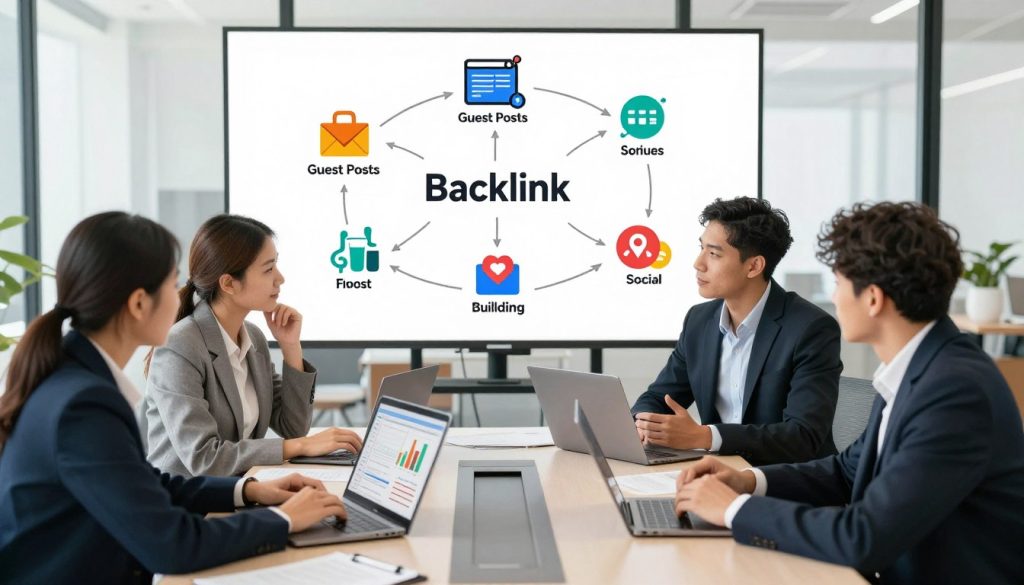
By incorporating these backlink building strategies into your off-page SEO efforts, you can improve your website’s authority, drive more traffic, and enhance your search engine rankings. Focus on creating high-quality content and building genuine relationships with other websites in your niche.
Content Marketing as an Off-Page SEO Strategy
Content marketing is a pivotal element in off-page SEO strategies, enabling businesses to build brand awareness and attract high-quality backlinks. By creating valuable and relevant content, businesses can drive link acquisition and enhance their online visibility.
Creating 10x Content That Naturally Attracts Links
To attract links naturally, it’s essential to create 10x content that surpasses existing content on the same topic. This involves producing comprehensive, well-researched, and engaging content that provides unique insights or solutions.
Promoting Content Effectively Across Channels
Effective content promotion is crucial for maximizing visibility and attracting links. This can be achieved by leveraging various channels, including social media, email newsletters, and influencer outreach.
Leveraging Social Media for Content Distribution
Social media platforms offer a powerful means of distributing content and driving engagement. By tailoring content to specific platforms, businesses can increase their reach and attract more links.
Platform-Specific Strategies
Different social media platforms require distinct strategies. For instance, visual-centric platforms like Instagram and Pinterest are ideal for promoting infographics and visual content.
Building Engagement That Leads to Links
Engagement is a critical factor in attracting links. By fostering a community and encouraging interactions, businesses can increase the likelihood of their content being linked to.
| Platform | Content Type | Engagement Strategy |
|---|---|---|
| Short-form content | Utilize hashtags and participate in trending conversations | |
| Detailed articles and videos | Encourage sharing and commenting | |
| Professional insights and industry news | Engage in relevant groups and discussions |
Avoiding Common Off-Page SEO Mistakes and Penalties
As you embark on your off-page SEO journey, it’s crucial to steer clear of practices that can harm your website’s credibility. Off-page SEO is a delicate balance of strategies that, when executed correctly, can significantly boost your site’s visibility and authority.
Black Hat Techniques to Stay Away From
One of the most significant risks in off-page SEO is employing black hat techniques such as buying links, participating in link schemes, or using automated programs to generate fake social signals. These tactics can lead to severe penalties from search engines, including being delisted from search results.
Recognizing Low-Quality Link Opportunities
Not all backlinks are created equal. It’s essential to identify and avoid low-quality link opportunities that can do more harm than good. Look out for sites with low domain authority, irrelevant content, or those that are overly spammy.
| Low-Quality Link Characteristics | High-Quality Link Characteristics |
|---|---|
| Low domain authority | High domain authority |
| Irrelevant or spammy content | Relevant and valuable content |
| Links from unrelated niches | Links from related niches |
How to Disavow Toxic Backlinks
If you’ve acquired toxic backlinks, either intentionally or unintentionally, it’s crucial to disavow them to prevent penalties. Use Google’s Disavow Tool to tell search engines that you don’t want certain links considered when assessing your site.
Maintaining a Natural Link Velocity
A sudden spike in backlinks can raise red flags with search engines. Maintaining a natural link velocity means acquiring links at a steady, organic pace. This approach not only avoids penalties but also contributes to a sustainable SEO strategy.

Conclusion: Measuring Success and Scaling Your Off-Page SEO Efforts
Now that you’ve implemented the off-page SEO strategies outlined in this guide, it’s essential to measure their effectiveness and plan for future growth. Start by tracking key performance indicators such as organic traffic, keyword rankings, and backlink quality.
To scale your off-page SEO efforts, focus on creating high-quality, linkable content and leveraging outreach opportunities to build authoritative backlinks. Continuously monitor your link profile and adjust your strategy as needed to maintain a natural link velocity.
By following this comprehensive off-page SEO guide and staying committed to your strategy, you’ll be well on your way to improving your website’s visibility, driving more qualified leads, and achieving long-term success in search engine rankings.
Leave a Reply