Tag: Internal Linking

  • Internal Linking for Better Search Rankings: A Proven Strategy

    Internal Linking for Better Search Rankings: A Proven Strategy

    Are you wondering if there’s a secret to making your website climb the search engine rankings? The answer might be simpler than you think. A well-planned SEO internal linking can be the key to unlocking better visibility online.

    Search engines like Google use complex algorithms to rank websites, and while the exact formula is a closely guarded secret, one thing is clear: a strategic internal linking strategy can significantly boost your site’s performance.

    By connecting relevant pages on your website, you’re not only improving user experience but also helping search engines understand your site’s structure and content hierarchy. This, in turn, can lead to better search rankings.

    Key Takeaways

    • A well-planned internal linking strategy improves website visibility.
    • Strategic internal linking boosts search engine rankings.
    • Connecting relevant pages enhances user experience.
    • Internal linking helps search engines understand your site’s structure.
    • Better search rankings can be achieved through effective SEO internal linking.

    Understanding the Power of Internal Links

    The power of internal linking lies in its ability to enhance your website’s structure and improve user experience. Internal linking is a fundamental aspect of SEO that helps search engines understand your website’s hierarchy and content relevance.

    What Are Internal Links and Why They Matter

    Internal links are hyperlinks that point to other pages within the same website. They are crucial for several reasons. Firstly, they help users navigate your website, improving engagement and reducing bounce rates. Secondly, internal links assist search engines in discovering and indexing new content on your site. As Google states, “a well-organized site structure helps Google crawl your site more efficiently.”

    How Search Engines Use Internal Links to Rank Pages

    Search engines like Google use internal links to understand the relationship between different pages on your website. By analyzing these links, search engines can determine the importance of each page and how it contributes to your site’s overall authority. As Moz notes, “internal links are a key factor in how search engines rank pages.” A well-planned internal linking strategy can thus significantly impact your website’s search rankings.

    By understanding and leveraging the power of internal links, you can improve your website’s visibility, drive more traffic, and enhance your overall SEO strategy.

    The Benefits of a Strong Internal Linking Strategy

    Internal linking is a powerful SEO technique that offers numerous benefits for website owners. By strategically linking to relevant pages within their site, businesses can improve user experience, enhance search engine crawlability, and boost overall website performance.

    Improved Website Navigation and User Experience

    A well-structured internal linking strategy helps users find the information they need more easily, leading to a better overall experience on the site. This can result in increased engagement and reduced bounce rates.

    Enhanced Page Authority Distribution

    Internal linking allows websites to distribute page authority more effectively, ensuring that important pages receive the attention they deserve from search engines. This can lead to improved search engine rankings for targeted keywords.

    A dynamic visual representation of the benefits of internal linking in digital marketing. In the foreground, a diverse group of professionals, dressed in smart business attire, gathers around a sleek table filled with laptops and notepads, actively discussing internal linking strategies. In the middle, a vibrant infographic of interconnected nodes representing web pages gleams on a digital screen, illustrating the flow of authority and improved search rankings. The background features a modern office environment with soft, professional lighting that enhances collaboration and innovation. The overall mood is one of excitement and strategic thinking, emphasizing the importance of a robust internal linking strategy in achieving online success. The lens is slightly angled to create depth, focusing on the interaction between the team and the informative display.

    Increased Crawl Efficiency and Indexation

    By providing a clear structure through internal linking, websites can improve crawl efficiency, making it easier for search engines to discover and index new content.

    Reduced Bounce Rates and Longer Sessions

    When users can easily navigate a site and find relevant information, they’re more likely to stay longer and explore further, reducing bounce rates and increasing session duration.

    Benefit Description Impact
    Improved Navigation Easier for users to find information Better User Experience
    Enhanced Authority Distribution Better distribution of page authority Improved Search Rankings
    Increased Crawl Efficiency Easier for search engines to crawl Faster Indexation

    Internal Linking Strategy for Better Rankings: The Fundamentals

    To achieve better search rankings, it’s essential to understand the fundamentals of an effective internal linking strategy. A well-planned internal linking structure not only improves user experience but also enhances your website’s visibility to search engines.

    Creating a Logical Site Hierarchy

    A logical site hierarchy is the foundation of a successful internal linking strategy. It involves organizing your content in a way that makes it easy for both users and search engines to navigate your site. This can be achieved by categorizing content into main themes and subthemes, creating a clear structure that flows from general to specific topics.

    Identifying Your Most Valuable Content

    Not all content is created equal. Identifying your most valuable content is crucial for determining which pages should be prioritized in your internal linking strategy. Use metrics such as page authority, traffic, and engagement to determine the value of each piece of content.

    Planning Strategic Link Pathways

    Once you’ve identified your most valuable content, it’s time to plan strategic link pathways. This involves creating a network of links that guide users and search engines through your site, highlighting your most important content. Use a mix of contextual links within your content and navigational links in menus and footers to create a robust linking structure.

    Balancing Link Equity Across Your Site

    Link equity refers to the value passed from one page to another through hyperlinks. Balancing link equity across your site ensures that all relevant pages have the opportunity to rank well in search engines. Avoid over-linking to a single page, and instead, distribute links thoughtfully throughout your site.

    Linking Strategy Description Benefits
    Logical Site Hierarchy Organizing content into categories and subcategories Improved navigation, better crawlability
    Valuable Content Identification Prioritizing content based on authority, traffic, and engagement Enhanced page authority, increased visibility
    Strategic Link Pathways Creating a network of links to guide users and search engines Better user experience, improved crawl efficiency
    Link Equity Balancing Distributing link value across relevant pages Improved rankings, increased visibility for key pages

    Best Practices for Effective Internal Linking

    To maximize the benefits of internal linking, it’s essential to implement best practices that enhance user experience and search engine crawlability. Effective internal linking is not just about connecting pages; it’s about creating a logical and accessible website structure that benefits both users and search engines.

    Using Descriptive and Keyword-Rich Anchor Text

    Using descriptive and keyword-rich anchor text is crucial for helping search engines understand the context of the linked page. This practice not only improves the user experience by providing clear expectations of what to find on the linked page but also enhances the SEO value of the link. For instance, using “learn more about internal linking best practices” is more informative than “click here.”

    Maintaining Natural Link Placement

    Links should be placed naturally within the content, avoiding forced or artificial placements that disrupt the user experience. A natural link placement strategy involves integrating links within relevant and useful content, making it easier for users to navigate to related information.

    A professional, vibrant office workspace showcasing best practices for effective internal linking. In the foreground, a sleek computer monitor displays a colorful flowchart illustrating an internal linking structure with arrows connecting various web pages. In the middle, a diverse team of three professionals dressed in smart business attire actively discusses the diagram, pointing at key link strategies and collaborating on a digital tablet. The background features bright, inviting shelves filled with books on SEO and digital marketing. Soft, natural light streams in through large windows, casting a warm glow over the scene. The atmosphere is focused and innovative, emphasizing teamwork and strategic thinking for improved search rankings.

    Optimizing Navigation Menus and Footers

    Navigation menus and footers are critical areas for internal linking as they provide primary access to a website’s main sections. Ensuring these areas are well-organized and link to relevant pages can significantly improve user experience and help search engines understand the site’s structure.

    Common Mistakes to Avoid

    Common mistakes in internal linking include over-linking, using non-descriptive anchor text, and neglecting mobile users. Avoiding these pitfalls requires a thoughtful and user-centric approach to internal linking. A well-planned internal linking strategy can enhance the overall performance of your website.

    Best Practice Description Benefit
    Descriptive Anchor Text Use keyword-rich text for links Improves SEO and user understanding
    Natural Link Placement Integrate links within content Enhances user experience
    Optimized Navigation Organize menus and footers effectively Improves site structure and accessibility

    Advanced Internal Linking Techniques

    To elevate your website’s SEO performance, it’s crucial to implement advanced internal linking techniques. These strategies go beyond basic linking and can significantly enhance your website’s authority and user experience.

    Implementing Topic Clusters and Pillar Content

    Topic clusters and pillar content are powerful internal linking strategies. By grouping related content around a central “pillar” page, you can create a comprehensive resource that search engines recognize as authoritative. This approach helps in organizing your content and making it more discoverable.

    Contextual Linking Strategies

    Contextual linking involves placing links within the body of your content where they add value to the reader. This technique not only improves user experience but also helps search engines understand the relevance and context of your links.

    Using Hub Pages to Strengthen Authority

    Hub pages act as central locations that link to related content across your site. By creating hub pages, you can strengthen your site’s authority on specific topics and improve navigation for both users and search engines.

    Internal Linking for Content Silos

    Content silos involve organizing your content into categories and subcategories, then linking within these silos to create a clear structure. This technique helps search engines understand your site’s hierarchy and can improve the visibility of related content.

    By implementing these advanced internal linking techniques, you can significantly enhance your website’s SEO performance and provide a better experience for your users.

    Step-by-Step Guide to Implementing an Internal Linking Plan

    Implementing an effective internal linking plan is crucial for improving your website’s search rankings. A well-planned internal linking strategy helps search engines understand your website’s structure and content hierarchy, which can lead to better crawl efficiency and indexation.

    Conducting a Content Audit

    The first step in creating an internal linking plan is to conduct a thorough content audit. This involves reviewing all the content on your website to identify high-quality, relevant pages that can be linked together. Identify your cornerstone content and assess the overall quality and relevance of each page.

    Mapping Your Internal Link Structure

    Once you have audited your content, map out your internal link structure. This involves visualizing how different pages on your website are connected. Use tools like mind maps or flowcharts to illustrate the relationships between different pages and identify potential linking opportunities.

    A visually engaging scene depicting an internal linking strategy for a digital marketing article. In the foreground, a diverse team of professionals in business attire huddles around a large digital screen displaying a colorful flowchart of interconnected website pages and links. In the middle, office elements like laptops, notebooks, and coffee cups create a productive workspace atmosphere, while a whiteboard filled with ideas and diagrams stands nearby. The background features a modern office with large windows, allowing soft natural light to illuminate the scene, enhancing focus and creativity. The mood is collaborative and innovative, showcasing teamwork and strategic planning in a contemporary marketing environment.

    Prioritizing Link Opportunities

    Not all pages on your website are equally important. Prioritize linking to pages that are most relevant to your target audience and have the highest potential for ranking well in search engines. Focus on creating a clear information hierarchy that guides users and search engines through your content.

    Executing Your Strategy Systematically

    Finally, execute your internal linking strategy systematically. Start by implementing links on your most important pages and gradually work your way down to less critical content.

    “A well-executed internal linking strategy can significantly improve your website’s SEO performance,”

    says SEO expert, Rand Fishkin.

    By following these steps, you can create an effective internal linking plan that improves your website’s search rankings and enhances user experience.

    Tools for Internal Linking Analysis and Implementation

    Analyzing and implementing an effective internal linking strategy is simplified with the use of specialized tools. These tools help identify opportunities, optimize link structures, and improve overall SEO performance.

    Website Crawlers: Screaming Frog and Sitebulb

    Website crawlers like Screaming Frog and Sitebulb are essential for internal linking analysis. They crawl your website to identify existing links, detect broken links, and provide insights into your site’s structure.

    Visualization Tools: Ahrefs and SEMrush

    Tools like Ahrefs and SEMrush offer visualization features that help you understand your internal linking structure. They provide site audits and recommendations for improvement.

    WordPress Plugins: Link Whisper and Yoast SEO

    For WordPress users, plugins like Link Whisper and Yoast SEO are invaluable. They help manage internal links, suggest relevant links, and optimize anchor text.

    Free Options for Small Websites

    For smaller websites, free tools can be sufficient. Google Search Console and Google Analytics provide valuable insights into your site’s performance and can help identify internal linking opportunities.

    Tool Function
    Screaming Frog Website Crawler
    Ahrefs Visualization and Audit
    Link Whisper WordPress Internal Linking

    Turning Your Internal Linking Knowledge Into Results

    By implementing a well-planned internal linking strategy, you can significantly improve your website’s search engine rankings. The internal linking benefits are multifaceted, enhancing user experience, page authority distribution, and crawl efficiency.

    To achieve better rankings, focus on creating a logical site hierarchy, identifying valuable content, and planning strategic link pathways. This internal linking strategy for better rankings will help you make the most of your content.

    With the right tools, such as Screaming Frog, Ahrefs, and Yoast SEO, you can analyze and optimize your internal linking structure. By executing your strategy systematically, you’ll be able to turn your internal linking knowledge into tangible results.

    By following the guidelines outlined in this article, you’ll be well on your way to improving your website’s search engine rankings and driving more traffic to your site.

    FAQ

    What is the primary purpose of internal linking in SEO?

    The primary purpose of internal linking is to help search engines understand a website’s structure, facilitating the crawling and indexing of its pages, and ultimately improving its search engine rankings.

    How does internal linking affect page authority distribution?

    Internal linking helps distribute page authority across a website by linking to other relevant and valuable content, thereby enhancing the overall authority of the site and improving the ranking potential of its pages.

    What are some best practices for implementing an effective internal linking strategy?

    Best practices include using descriptive and keyword-rich anchor text, maintaining natural link placement, optimizing navigation menus and footers, and avoiding common mistakes such as over-linking or using irrelevant links.

    How can I identify the most valuable content on my website for internal linking?

    To identify valuable content, conduct a content audit, analyze your website’s traffic and engagement metrics, and consider factors like relevance, quality, and user intent to determine which pages are most worthy of internal linking.

    What tools can I use for internal linking analysis and implementation?

    Tools like Screaming Frog, Sitebulb, Ahrefs, SEMrush, Link Whisper, and Yoast SEO can help with internal linking analysis and implementation, offering features like website crawling, visualization, and link suggestions to streamline the process.

    How can I measure the effectiveness of my internal linking strategy?

    To measure effectiveness, track changes in search engine rankings, website traffic, and user engagement metrics, and use tools like Google Search Console and analytics software to monitor the performance of your internal linking efforts.

    What is the role of topic clusters and pillar content in internal linking?

    Topic clusters and pillar content play a crucial role in internal linking by creating a structured and relevant link network that enhances a website’s authority on a particular topic, improving its search engine rankings and user experience.

    How often should I update my internal linking strategy?

    It’s essential to regularly review and update your internal linking strategy to reflect changes in your website’s content, user behavior, and search engine algorithms, ensuring that your internal linking remains optimized and effective.
  • On Page SEO for Beginners: A Step-by-Step Guide

    On Page SEO for Beginners: A Step-by-Step Guide

    Are you struggling to get your website noticed online? Are you wondering why your content isn’t ranking higher in search engine results? The answer lies in understanding the basics of on-page SEO.

    As a beginner, navigating the world of search engine optimization can be overwhelming. However, with a clear guide, you can start optimizing your website to improve your online visibility.

    This guide is designed to walk you through the essential steps of on-page SEO, helping you to boost your website’s ranking and drive more traffic to your site.

    Key Takeaways

    • Understand the basics of on-page SEO and its importance for your website.
    • Learn how to optimize your website’s content for better search engine rankings.
    • Discover the essential steps to improve your online visibility.
    • Get started with a clear guide to on-page SEO.
    • Boost your website’s ranking and drive more traffic to your site.

    What Is On-Page SEO and Why It Matters

    Understanding on-page SEO is crucial for any website looking to improve its search engine rankings. On-page SEO refers to the process of optimizing individual web pages to make them search engine friendly, thereby improving the website’s visibility and ranking on search engines.

    Definition and Basic Concepts

    On-page SEO involves several key elements, including keyword research, content optimization, and meta tags. By mastering these basics, you can significantly enhance your website’s search engine performance. Here are some fundamental concepts to get you started:

    • Understanding how search engines crawl and index your website
    • Optimizing your content with relevant keywords
    • Using meta tags to provide search engines with information about your page

    The Difference Between On-Page and Off-Page SEO

    While on-page SEO focuses on optimizing your website’s internal elements, off-page SEO involves building your website’s reputation and authority by acquiring high-quality backlinks from other websites. Both are crucial for a comprehensive SEO strategy. Here are the key differences:

    1. On-page SEO is about optimizing your website’s content and structure
    2. Off-page SEO is about building your website’s reputation through external signals

    By understanding the distinction between on-page and off-page SEO, you can develop a more effective SEO strategy that covers all bases.

    Getting Started: Essential On-Page SEO Tools

    To kick-start your on-page SEO journey, you’ll need the right tools. On-page SEO involves optimizing individual web pages to rank higher in search engines. With the plethora of tools available, selecting the right ones can be overwhelming, especially for beginners.

    Free SEO Tools for Beginners

    Fortunately, there are several free SEO tools that can help beginners get started with their on-page SEO strategy. These tools provide insights into how search engines view your website and help identify areas for improvement.

    Google Search Console Basics

    Google Search Console is a must-have tool for any website owner. It helps monitor your site’s presence in Google Search results, including keyword rankings, click-through rates, and impressions. Setting up Google Search Console is straightforward and provides valuable data on your website’s performance.

    Keyword Research Tools

    Keyword research is a critical component of on-page SEO. Tools like Google Keyword Planner and Ubersuggest help identify relevant keywords, search volume, and competition. These tools are essential for crafting a keyword strategy that resonates with your target audience.

    Setting Up Google Analytics for SEO Tracking

    Google Analytics is a powerful tool for tracking your website’s traffic, engagement, and conversion rates. By setting up Google Analytics, you can measure the effectiveness of your on-page SEO efforts and make data-driven decisions to improve your strategy.

    Here’s an example of how Google Analytics can provide insights into your website’s performance:

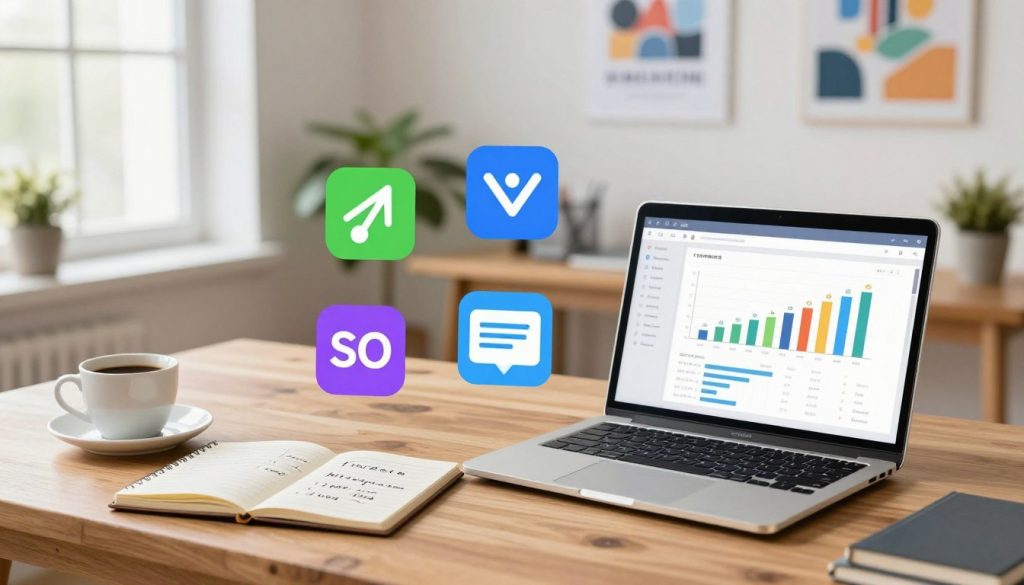
    A visually appealing and informative workspace depicting essential on-page SEO tools laid out on a wooden desk. In the foreground, include a sleek laptop displaying graphs and analytics to symbolize digital analysis. Beside it, a notepad with handwritten notes on SEO strategies and a cup of coffee for a productive atmosphere. In the middle ground, feature a collection of colorful SEO tool icons like keyword analyzers, meta tag generators, and website audit tools artistically arranged. The background should be softly blurred to reveal a bright, organized office space with motivational posters and potted plants, evoking a feeling of inspiration and focus. Use natural lighting from a nearby window to create a warm, inviting atmosphere. The composition should convey professionalism and the importance of having the right tools for on-page SEO success.

    Metric Description Importance for SEO
    Organic Traffic Visitors coming from search engines High
    Bounce Rate Percentage of visitors who leave immediately Medium
    Average Session Duration Time spent on the website Medium

    By leveraging these essential on-page SEO tools, beginners can lay a solid foundation for their SEO strategy and improve their website’s visibility in search engine results.

    On-Page SEO for Beginners Step by Step: The Foundation

    The journey to mastering on-page SEO begins with understanding its fundamental components. For beginners, this involves a step-by-step approach to optimizing web content effectively.

    Keyword Research Fundamentals

    Keyword research is the cornerstone of any successful SEO strategy. It involves identifying the terms and phrases your target audience uses when searching for content like yours.

    Finding Low-Competition Keywords

    To increase your visibility, focus on low-competition keywords that have a reasonable search volume. Tools like Google Keyword Planner or Ahrefs can help you identify these opportunities.

    Understanding Search Intent

    Understanding the intent behind a search query is crucial. Are users looking for information, products, or services? Aligning your content with search intent improves its relevance and ranking potential.

    Analyzing Your Competitors’ On-Page Strategy

    Analyzing your competitors involves examining their keyword choices, content structure, and meta tags. This analysis can reveal gaps in their strategy that you can exploit.

    Competitor Keyword Strategy Content Quality
    Competitor A Focuses on long-tail keywords High-quality, engaging content
    Competitor B Targets broad keywords Average content quality

    By understanding your competitors’ strengths and weaknesses, you can refine your SEO strategy to outperform them.

    Optimizing Your Content Structure

    Optimizing your content structure is crucial for improving search engine rankings and driving more traffic to your website. A well-organized content not only enhances user experience but also makes it easier for search engines to crawl and index your pages.

    Crafting SEO-Friendly Title Tags

    Title tags are a critical element in on-page SEO, as they provide a summary of your page’s content to search engines. To craft SEO-friendly title tags, ensure they are descriptive, concise, and include your target keywords. A good title tag should be no more than 60 characters to avoid truncation in search engine results.

    Writing Compelling Meta Descriptions

    Meta descriptions provide a brief summary of your page’s content and entice users to click through from search engine results. To write compelling meta descriptions, focus on creating unique, descriptive, and enticing summaries that include your target keywords. Keep your meta descriptions under 160 characters to ensure they display fully in search results.

    Header Tags Hierarchy and Optimization

    Header tags (H1, H2, H3, etc.) play a crucial role in structuring your content and highlighting key points for both users and search engines. To optimize your header tags, ensure you follow a logical hierarchy and include your target keywords where relevant.

    Using Keywords in Headers

    Incorporating your target keywords into your header tags can help reinforce your content’s relevance to search engines. However, ensure that your headers remain descriptive and readable, avoiding keyword stuffing.

    Creating a Logical Content Structure

    A logical content structure is essential for both user experience and SEO. Organize your content into clear sections using header tags, and ensure that your content flows logically from one section to the next.

    Content Structure Element SEO Benefit Best Practice
    Title Tags Improved search engine rankings Include target keywords, keep under 60 characters
    Meta Descriptions Increased click-through rates Write unique, descriptive summaries, keep under 160 characters
    Header Tags Enhanced content structure and readability Follow a logical hierarchy, include target keywords

    An organized workspace focused on content structure optimization. In the foreground, a sleek laptop displays a flowchart of content hierarchy, with colorful sections illustrating headings, subheadings, and bullet points. Beside it, neatly stacked notebooks and color-coded sticky notes provide a sense of planning. In the middle layer, a professional figure in business attire is reviewing the flowchart, having short brown hair and wearing glasses, with a focused expression of determination. The background features a modern office with large windows allowing natural light to flood in, and a bookshelf filled with SEO guides and resources. The overall mood is one of clarity, focus, and productivity, with soft lighting creating a warm atmosphere that inspires creativity and learning.

    Content Optimization Strategies

    Optimizing your web content is a key step in developing a successful SEO strategy for beginners. Effective content optimization involves several strategies that can significantly improve your website’s visibility and ranking on search engines.

    Creating High-Quality, Relevant Content

    To start with, creating high-quality, relevant content is paramount. This involves understanding your audience and crafting content that addresses their needs and questions.

    Content Length and Depth Considerations

    The length and depth of your content are crucial factors. While there’s no one-size-fits-all answer to the ideal content length, it’s generally agreed that comprehensive content tends to perform better in search engine rankings.

    Addressing User Questions

    Content should be designed to address user questions effectively. This means understanding the intent behind the search queries you’re targeting and providing clear, concise answers.

    Keyword Placement and Density

    Keyword placement is another critical aspect of content optimization. Keywords should be placed strategically in your content, including in the title, headings, and throughout the body, but always in a way that feels natural and readable.

    Maintaining an optimal keyword density is also important. The goal is to use your target keywords enough to signal their relevance to search engines, but not so much that it detracts from the readability of your content.

    Improving Readability and User Experience

    Finally, improving readability and user experience is vital. This involves using clear, concise language, breaking up content with headings and subheadings, and ensuring that your website is mobile-friendly and loads quickly.

    By focusing on these content optimization strategies, you can enhance your website’s on-page SEO and improve its visibility in search engine results.

    Technical On-Page Elements and Mobile Optimization

    Mastering technical on-page SEO elements is crucial for improving your website’s visibility and search engine rankings. As we dive into the technical aspects, you’ll learn how to optimize your website for better performance.

    URL Structure Best Practices

    A well-structured URL is essential for SEO. It should be descriptive, concise, and include target keywords. Avoid using numbers and special characters. For example, www.example.com/best-seo-practices is a good URL structure.

    Image Optimization Techniques

    Optimizing images can significantly improve your page’s load time and SEO. Use descriptive alt tags and file names that include target keywords. Compressing images can also help reduce page load times.

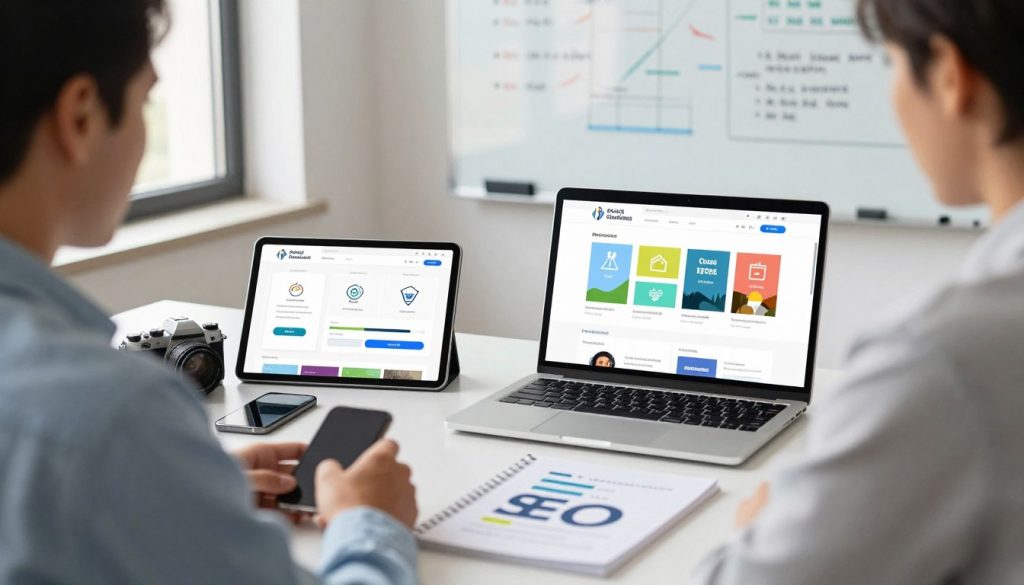
    A well-lit office environment featuring a focused, professional individual sitting at a modern desk. In the foreground, a laptop screen displays colorful graphs illustrating image optimization techniques, with icons representing metadata, compression, and responsive design. On the desk, there are design tools like a camera, a mobile device, and an SEO booklet. In the middle, a digital tablet shows a mock-up of a mobile-optimized website, emphasizing clean layouts and fast-loading elements. The background includes a whiteboard filled with technical notes and diagrams about on-page SEO strategies. The atmosphere is one of productivity and foresight, with soft, natural light streaming through a window, creating an inviting yet professional ambiance.

    Internal Linking Strategy

    A well-planned internal linking strategy helps search engines understand your website’s structure. Link to relevant pages to improve user experience and enhance SEO.

    Mobile-Friendly Page Optimization

    With the majority of users accessing websites through mobile devices, having a mobile-friendly website is crucial. Ensure your website is responsive and loads quickly on mobile devices to improve user experience and search engine rankings.

    By implementing these technical on-page SEO elements, you can significantly improve your website’s search engine rankings and drive more traffic to your site.

    Conclusion: Measuring Your SEO Success and Next Steps

    Now that you’ve learned the fundamentals of on-page SEO, it’s time to put your knowledge into practice. By following the on page seo for beginners step by step guide, you’ve gained a solid understanding of how to optimize your website for search engines.

    To measure your SEO success, focus on tracking key metrics such as organic traffic, keyword rankings, and conversion rates. Utilize tools like Google Analytics to monitor your website’s performance and adjust your seo strategy for beginners accordingly.

    As you continue to refine your seo basics for website, remember to stay up-to-date with the latest SEO trends and best practices. This will enable you to maintain a competitive edge and drive long-term success for your online presence.

    By implementing these strategies and continually monitoring your progress, you’ll be well on your way to improving your website’s visibility and driving more traffic to your site.

    FAQ

    What is on-page SEO, and why is it crucial for my website?

    On-page SEO refers to the process of optimizing individual web pages to rank higher in search engines. It’s crucial because it helps search engines understand your content, improving your website’s visibility and driving more qualified traffic to your site.

    How do I start with on-page SEO as a beginner?

    Start by understanding the basics of on-page SEO, including keyword research, content optimization, and technical SEO. Use free tools like Google Search Console and keyword research tools to get started.

    What are the most important on-page SEO elements I should focus on?

    Focus on crafting SEO-friendly title tags, writing compelling meta descriptions, optimizing header tags, and creating high-quality, relevant content. Also, pay attention to URL structure, image optimization, and internal linking.

    How often should I update my content for on-page SEO?

    Regularly updating your content is essential for on-page SEO. Aim to refresh your content every few months to keep it relevant and up-to-date, and to signal to search engines that your site is active and deserves crawling more frequently.

    Can I do on-page SEO myself, or do I need to hire an expert?

    You can start with on-page SEO yourself by following a step-by-step guide and using available tools. However, if you’re short on time or want advanced strategies, consider hiring an SEO expert to help you optimize your website effectively.

    How long does it take to see results from on-page SEO efforts?

    The time it takes to see results from on-page SEO varies depending on factors like your website’s age, competition, and the quality of your optimization efforts. Generally, you can start seeing improvements within a few weeks to a few months.

    What are some common on-page SEO mistakes to avoid?

    Common mistakes include keyword stuffing, using duplicate or thin content, neglecting mobile optimization, and ignoring technical SEO aspects like URL structure and internal linking. Avoid these mistakes to ensure your on-page SEO efforts are effective.

    How does mobile optimization impact my on-page SEO?

    Mobile optimization is critical for on-page SEO because it directly affects user experience and search engine rankings. Ensure your website is mobile-friendly, with fast loading speeds and a responsive design, to improve your search engine rankings and drive more traffic.